The Hidden Job Market is Here
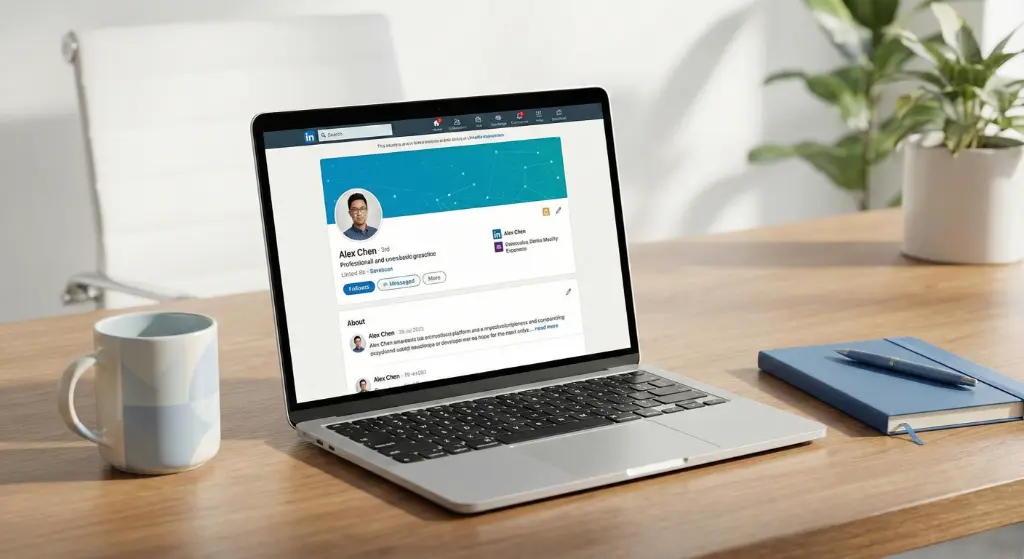
Most job seekers treat LinkedIn like a digital filing cabinet—a place to store their resume and hope for the best. This is a fundamental misunderstanding of the platform. LinkedIn is not a storage unit; it is a search engine.
Every day, thousands of recruiters use LinkedIn Recruiter to search for candidates using keywords, just like you use Google. If your profile isn't optimized for their search terms, you don't exist. Furthermore, the 'Hidden Job Market'—roles that are filled through referrals and direct sourcing without ever being posted—lives on LinkedIn.
This guide will transform your profile from a passive document into an active magnet for opportunities.
1. The Headline: Your 120-Character Pitch
Your headline is the only thing a recruiter sees before they click on your profile. By default, LinkedIn sets this to your current job title (e.g., 'Marketing Manager at Company X'). This is a wasted opportunity.
Your headline should answer three questions: Who are you? What do you do? How do you help? Use this formula:
[Role] | [Key Achievement/Specialty] | [Value Proposition]
- **Weak:** Software Engineer at TechCorp.
- **Strong:** Senior Full-Stack Engineer | React & Node.js Specialist | Building Scalable SaaS Solutions for FinTech.
- **Weak:** Student at University of X.
- **Strong:** Aspiring Data Analyst | Python & SQL | Transforming Complex Data into Business Insights.
2. The 'About' Section: Your Professional Story
Do not copy and paste your resume summary here. Your resume is formal and objective; your LinkedIn About section should be personal and conversational. Write in the first person ('I' statements).
Structure your About section like a story:
- **The Hook:** Start with a sentence that grabs attention. 'I build products that people actually want to use.'
- **The Backstory:** Briefly explain how you got here. What drives you? What challenges have you solved?
- **The Future:** What are you looking for next? Be clear about the types of problems you want to solve.
3. Experience: Results Over Responsibilities
Like your resume, your experience section should focus on achievements, not duties. But unlike your resume, LinkedIn offers unlimited space and rich media integration.
Under each role, attach links to projects, upload PDFs of presentations, or feature videos of talks you've given. This provides tangible proof of your skills. If you're a designer, link your portfolio. If you're a developer, link your GitHub. If you're a marketer, link campaigns you managed.
4. Strategic Networking (Not Just Collecting Connections)
Having 500+ connections is great, but only if they are relevant. Quality beats quantity. When building your network, follow the Golden Rule of LinkedIn:
Never send a connection request without a personalized note.
A blank request says, 'I want another number.' A personalized note says, 'I value you.' Here is a template:
'Hi [Name], I've been following your work on [Topic] and really enjoyed your recent post about [Subject]. I'm also working in [Industry] and would love to connect. Best, [Your Name].'
Also, don't just target hiring managers. Connect with peers at your target companies. They are often the ones who know about job openings before they are posted and can provide referrals.
5. Engagement: Being Visible Without Being Annoying
The '90-9-1' rule applies to social media: 90% lurk, 9% contribute, and 1% create. By simply engaging, you instantly move into the top 10% of users.
You don't need to write viral thought leadership posts every day. A more effective strategy for job seekers is thoughtful commenting. Set a goal to comment on 3 posts per day from leaders in your industry. Add value, ask questions, or share a counter-perspective. This puts your name and headline in front of their entire network.
6. The 'Hidden' Features
- **Open to Work:** You can signal you are looking for a job without your boss knowing. Use the 'Recruiters Only' setting to privately signal your availability to recruiters using LinkedIn Recruiter.
- **Skills:** The LinkedIn algorithm uses the Skills section to match you with jobs. Add up to 50 skills, ensuring your top 3 are your most relevant hard skills.
- **Recommendations:** Social proof is powerful. Ask 3 former colleagues or managers for a recommendation. Offer to write one for them in return.
Final Thoughts: Consistency Wins
Your LinkedIn profile is a living document, not a static file. Update it as you learn new skills or complete new projects. Engage consistently, network intentionally, and treat your profile as your 24/7 career ambassador. The opportunities will follow.